Professional Biography – Kayode Oyeyemi

Kayode Oyeyemi is a seasoned Technology and Internet Governance professional with over a decade of experience driving digital transformation initiatives, multistakeholder collaboration, and ICT ecosystem development across Africa. He currently serves as Senior Programme Officer at the Africa ICT Alliance (AfICTA), a leading pan-African ICT industry body committed to advancing innovation, digital policy advocacy, and sustainable technology growth across the continent. 

In his role at AfICTA, Kayode oversees programme coordination, governance operations, digital infrastructure management, and strategic stakeholder engagement. He plays a central role in organizing high-level continental events, coordinating the Africa ICT Awards, supporting private sector participation in Internet Governance processes, and managing AfICTA’s digital platforms, communications systems, and membership ecosystem. His work bridges technology operations, policy dialogue, institutional governance, and strategic communications, positioning him at the intersection of technical expertise and policy leadership.

Kayode is a Fellow of the African School on Internet Governance (AfriSIG) held at Zanziba, Tanzania, and the Nigeria School on Internet Governance (NSIG) in Abuja. Through these platforms and other regional engagements, he has actively contributed to national, regional, and global conversations on digital sovereignty, cybersecurity, data governance, affordable connectivity, and emerging technologies. He has supported workshop proposals, reporting processes, and stakeholder coordination within global forums such as the Internet Governance Forum (IGF) and the World Summit on the Information Society (WSIS). 

With a background in Computer Science (HND), Kayode combines technical proficiency with strategic programme management experience. His expertise spans digital policy coordination, ICT capacity building, event systems architecture, communications strategy, web administration, and institutional compliance. He has worked closely with government representatives, private sector leaders, civil society actors, and academia to foster collaborative approaches to Africa’s digital advancement. He also a member of the Nigerian  IGF Multi-Stakeholder Advisory Group, representing the Private Sector.

Kayode is particularly passionate about strengthening Africa’s digital infrastructure, promoting inclusive innovation, reducing connectivity costs, and advancing policies that align technology development with the Sustainable Development Goals (SDGs). He believes that multistakeholder cooperation, regional collaboration, and forward-looking policy frameworks are essential to unlocking Africa’s digital potential.

Beyond his professional responsibilities, he is deeply committed to knowledge sharing, public speaking, youth mentorship, and thought leadership on emerging technologies and digital governance in Africa. His work continues to contribute to shaping conversations around Africa’s role in the global digital economy and building resilient, future-ready ICT ecosystems across the continent.

Featured

AfICTA Deputy Chair, Ms Rachael Shitanda Urges Youth-Centered Strategies to Counter Online Extremism at NCTC X-Space Dialogue


The Africa ICT Alliance (AfICTA) today highlighted the impactful contribution of its Deputy Chair and Vice-Chair East Africa, Ms. Rachael Shitanda, during a high-level virtual X-Space dialogue hosted by Kenya’s National Counter Terrorism Centre (NCTC) under its Citizen Support Mechanism (CSM).

Titled “Scrolling into Danger? Youth, Social Media and Extremist Content,” the session convened technologists, civil society leaders, policymakers, and young voices to explore how violent extremist groups exploit digital platforms and how youth can be equipped to recognize, resist, and counter such narratives.

With over 70% of Kenya’s population under the age of 35, and social media platforms like X, TikTok, Instagram, Facebook, and YouTube deeply embedded in daily life, the discussion underscored the urgent need for proactive, youth-inclusive solutions to online radicalization.

Ms. Shitanda who is also the Chief of Products and Technology at UpraiseCX challenged the prevailing reliance on reactive content moderation, urging a shift toward prevention rooted in digital literacy, inclusion, and trust. “Technology evolves faster than regulation, and algorithms prioritize attention over truth,” she said. “But young people aren’t falling behind; they’re already living in these digital ecosystems. Our strategies must meet them there.”

Drawing on her experience in tech innovation and digital governance, Ms. Shitanda emphasized that radicalization often begins long before violence manifests: “It starts quietly, with isolation, unanswered questions, and curated content that distorts reality. By the time it becomes visible, intervention is far more difficult.”

She called for a reimagined approach: “Removing harmful content is necessary, but not enough. Prevention begins with empowering individuals to make conscious choices of what to engage with, what to share, and when to pause. These everyday decisions shape algorithms, narratives, and ultimately, real-world outcomes.

The purpose was to:

1. Expose tactics used by extremist groups to recruit youth online
2. Promote critical digital literacy and responsible engagement
3. Foster open conversations about online safety without compromising free expression
4. Strengthen collaboration among government, civil society, and youth influencers

In closing, Ms. Shitanda reaffirmed the central role of young people as partners, not problems, in securing digital spaces: “Extremism loses its grip when young people are informed, heard, and empowered. Building safer online ecosystems requires more than smarter platforms or stricter laws; it demands investment in people as co-creators of a resilient digital future.

AfICTA remains committed to advancing inclusive digital governance, ethical technology use, and policies that position Africa’s youth at the forefront of shaping safe, open, and equitable digital spaces across the continent.

WSIS+20: Sustaining Multistakeholderism in a Rapidly Evolving Digital Age - Remarks by Dr. Jimson Olufuye

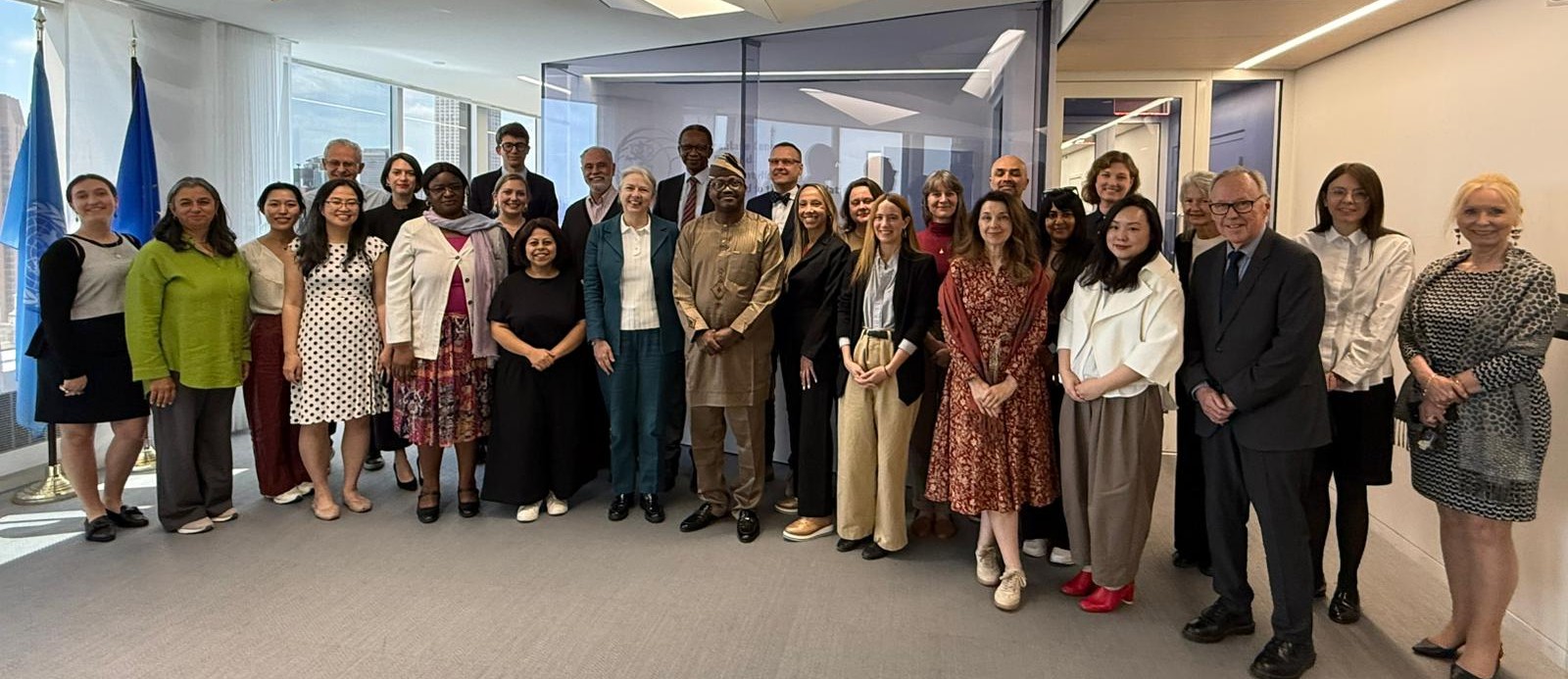
Dr. Jimson Olufuye, Chair of the Advisory Council of the Africa ICT Alliance (AfICTA), delivered this address at the United Nations General Assembly during the 20-year review of the World Summit on the Information Society (WSIS+20). Speaking in his capacity as a member of the WSIS+20 Informal Multistakeholder Sounding Board (IMSB) and the Internet Governance Forum Multistakeholder Advisory Group, he reflected on the origins of WSIS and its foundational recognition of the multistakeholder nature of the information society. He highlighted AfICTA’s growth from a six-country initiative in 2012 to a pan-African alliance spanning over 40 countries, noting that the WSIS vision directly inspired its formation and mission to ensure the fulfillment of the promise of the digital age for everyone in Africa.

In his remarks, Dr. Olufuye emphasized the urgency of enhanced digital cooperation in the era of artificial intelligence, calling for interoperable data governance, strengthened online security, respect for human rights, and sustained investment in digital infrastructure, literacy, and connectivity to bridge digital divides within and across countries. He welcomed the decision to make the Internet Governance Forum (IGF) permanent, recognizing it as a critical platform for reviewing WSIS outcomes and the Global Digital Compact while avoiding duplication across national, regional, and global processes. He also commended Nigeria for convening Africa’s first truly multistakeholder delegation to the UN General Assembly and expressed appreciation to the leadership of the General Assembly for the opportunity to contribute to this historic review.

Read the complete speech here

Featured

Joint Statement between United Arab Emirates, African Union Commission


A high-level meeting has been held in Addis Ababa between Mahmoud Ali Youssouf, the Chairperson of the African Union Commission (AUC), and Sheikh Shakhboot bin Nahyan Al Nahyan, the UAE Minister of State.

The meeting built upon the first round of political consultations that took place in Abu Dhabi on September 13, 2025, under the framework of the 2019 Memorandum of Understanding. Both sides reaffirmed their mutual commitment to enhancing the partnership between the UAE and the African Union.

D
uring the meeting, they reviewed the progress made since the inaugural consultations, exchanged views on priority areas for cooperation, and reiterated their dedication to maintaining ongoing political dialogue.

They focused on the importance of Agenda 2063, particularly the flagship initiative “Silencing the Guns by 2030,” along with the African Continental Free Trade Area (AfCFTA). They emphasized the interconnectedness of peace, security, trade, and development. 

Given the context, they agreed to enhance cooperation in support of these strategic priorities, recognizing that lasting peace is essential for economic integration, while increased trade and investment contribute to stability, resilience, and sustainable development in Africa.

Both sides also welcomed the UAE's launch of the US$1 billion "AI for Development" initiative, which was announced at the G20 Leaders’ Summit in Johannesburg in November 2025. They affirmed that this initiative has the potential to support Africa’s development priorities through innovation and digital transformation. 

The Chairperson and the Minister discussed the dynamics of peace and security in the Horn of Africa, emphasizing the strong interdependence between stability in this region and security in the Arabian Gulf. This includes concerns related to maritime security and regional prosperity. 

Regarding Sudan, both parties highlighted the urgent need for an immediate, unconditional humanitarian truce, a permanent ceasefire, and unhindered humanitarian access throughout the country. They stressed the importance of accountability for violations of international humanitarian law and the establishment of an independent civilian-led government that reflects the aspirations of the Sudanese people. 

They recalled the joint statement issued by the African Union Commission and IGAD on September 14, 2025, which welcomed the QUAD Joint Statement from September 12, 2025. Additionally, they remembered the High-Level Humanitarian Conference held during the AU Summit in February 2025, and they welcomed the regional and international efforts to address the humanitarian crisis. Both sides condemned the atrocities committed against civilians by the warring parties and reaffirmed their support for Sudan’s territorial integrity and unity, stressing the necessity of a peaceful resolution. 

On Somalia, both sides expressed their ongoing support for the country's sovereignty, territorial integrity, security, and stability. 

They also emphasized that the occupation of the three islands of the United Arab Emirates—Greater Tunb, Lesser Tunb, and Abu Musa—by Iran is a violation of the UAE's sovereignty and contravenes the principles of the United Nations Charter. Both parties reiterated their support for the UAE’s call for a peaceful resolution to the dispute over these islands, in accordance with international law, including through bilateral negotiations or the International Court of Justice. 

In light of the 2026 African Union theme on water and sanitation, both sides highlighted the upcoming 2026 United Nations Water Conference, which will be co-hosted by the UAE and the Republic of Senegal. They regard this conference as a vital opportunity to promote global action on water resilience. The two parties agreed to work closely together to achieve tangible, action-oriented results and measurable impacts across Africa through initiatives like the Mohamed bin Zayed Water Initiative. 

Both sides reaffirmed their commitment to strengthening cooperation between the African Union Commission and the UAE in order to support shared priorities aimed at promoting peace, stability, and sustainable development.


AfICTA Endorses the Global Statement on the Role of Encryption in Securing Trust and Enabling the Digital Economy

As one of the undersigned organizations, AfICTA - Africa ICT Alliance, believes that strong encryption is essential to the global digital economy. Encryption safeguards user privacy, protects sensitive data, and enables trust, which are foundations of commerce, communication, and innovation. Encryption is a vital tool for ensuring that consumers, businesses, and governments can confidently engage online, fostering a secure environment that supports economic growth and cross-border collaboration.

Any effort to undermine encryption, whether through backdoors, key escrow systems, or technical mandates, undermines that trust. Weakening encryption introduces systemic vulnerabilities that criminals and hostile actors can exploit, erodes consumer confidence, and drives users and businesses toward unsecure platforms. Further, inconsistent national approaches to encryption risk are fragmenting the global digital economy, creating barriers to trade and interoperability across borders.

We recognise the legitimate needs of law enforcement and national security agencies to access evidence and combat crime. However, these goals must be pursued through lawful, proportionate, and technologically sound means that do not compromise the safety and privacy of billions of consumer and enterprise users. Policymakers should strengthen, not weaken, the tools that protect our shared digital infrastructure.

By endorsing this statement, we collectively call on governments around the globe to advance policies that protect encryption as a vital enabler of digital trust and economic prosperity. All stakeholders must stand together to ensure that strong encryption remains available to establish and maintain trust across the global digital economy.

1. ACT | The App Association
2. AfICTA-Africa ICT Alliance
3. Africa Center for Education Technology and Innovation
4. Associazione Italiana Internet Provider
5. Business Software Alliance
6. Center for Democracy & Technology
7. Center for Online Safety and Liberty
8. Coalition of Services Industries (CSI)
9. Computer and Communications Industry Association
10. Comunitatea Internet Association
11. Connected Commerce Council
12. Consumer Choice Center Europe
13. Consumer Technology Association (CTA)
14. Cybersecurity Advisors Network (CyAN)
15. Danish Entrepreneurs
16. Data Rights
17. Demand Progress
18. Digital Rights Nepal (DRN)
19. Digital Rights Zimbabwe
20. Digital Transparency Lab
21. DigiTelHer
22. eco – Association of the Internet Industry
23. Engine
24. EuroISPA - European Internet Services Providers Association
25. FiCom ry
26. Global Partners Digital
27. HOUSE OF AFRICA
28. Human Rights Journalists Network Nigeria
29. Information Technology Industry Council (ITI)
30. Internet Australia
31. Internet Governance Project at Georgia Tech
32. Internet Infrastructure Coalition
33. Internet Safe Kids Africa
34. Internet Society
35. Internet Society – Brazil Chapter
36. Internet Society – Catalan Chapter
37. Internet Society – India Hyderabad Chapter
38. Internet Society – Jamaica Chapter
39. Internet Society – Mali Chapter
40. Internet Society – Paraguay Chapter
41. Internet Society – United Kingdom Chapter
42. Japan Association of New Economy
43. JCA-NET (Japan)
44. Kijiji Yeetu
45. Koneta Hub
46. LGBT Tech
47. Media Rights Agenda (MRA)
48. National Foreign Trade Council (NFTC)
49. OpenMedia
50. Pristine SACC Education and Technology Initiative
51. Privacy & Access Council of Canada
52. Restore The Fourth
53. Small Business & Entrepreneurship Council
54. Software & Information Industry Association (SIIA)
55. Surveillance Technology Oversight Project (S.T.O.P.)
56. TechFreedom
57. Technology Trade Regulation Alliance (TTRA)
58. TEDIC
59. UBUNTEAM
60. US-ASEAN Business Council
61. VPN Trust Initiative